
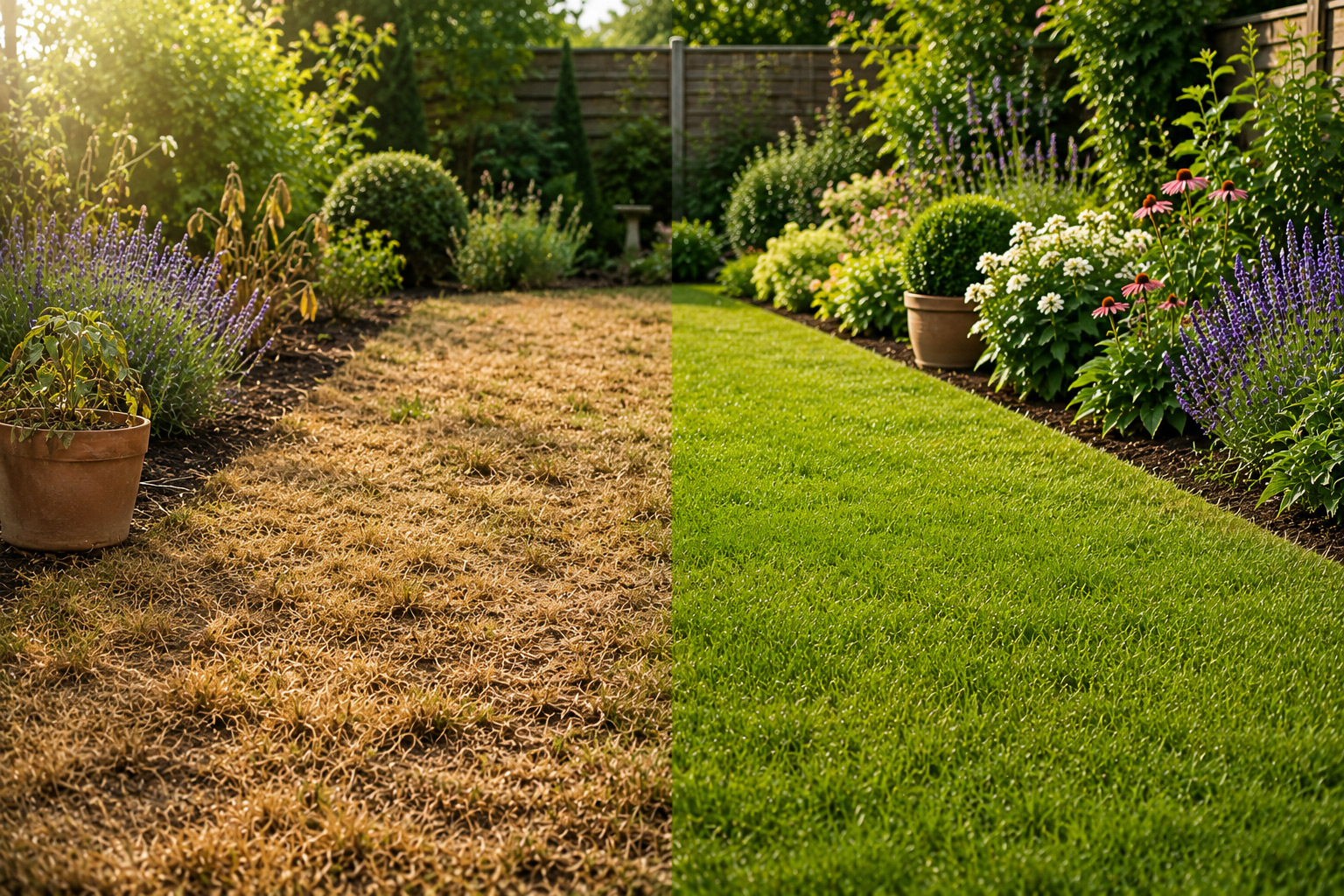
When a hosepipe ban is announced, many homeowners immediately worry about the future of their garden.
Will the lawn die? Should you stop mowing? Can you still water your plants?
While dry weather undoubtedly puts gardens under pressure, the biggest damage often isn’t caused by the weather itself—it’s caused by well-intentioned mistakes that many people make without realising.
At Cloverfields Gardening, we’ve helped homeowners across Bishop’s Stortford, Sawbridgeworth, Harlow, Hatfield Heath, Stansted, Takeley and the surrounding villages keep their gardens healthy through some of the hottest and driest summers in recent years.
In this guide, we’ll look at the five most common mistakes people make during a hosepipe ban and explain what you should do instead.
Mistake 1: Watering During the Middle of the Day
It might seem logical to water your plants as soon as they begin looking thirsty, but watering during the hottest part of the day is one of the least effective things you can do.
When the sun is high and temperatures peak, much of the water evaporates before it has a chance to soak into the soil. This means your plants receive less moisture while you’re using more water than necessary.
What You Should Do Instead
If restrictions allow you to use a watering can, aim to water either:
- Early in the morning (before 8am)
- Later in the evening (after 7pm)
These cooler parts of the day allow the water to soak deeper into the soil, reaching the roots where it’s needed most.
Top Tip: Water the base of the plant rather than the leaves. This reduces evaporation and helps minimise the risk of fungal diseases.
Mistake 2: Cutting Your Grass Too Short
Many people believe that mowing the lawn very short means it won’t need cutting again for a while.
Unfortunately, the opposite is often true.
Short grass exposes the soil to direct sunlight, causing moisture to evaporate much faster. It also weakens the grass, making it less able to cope with prolonged dry weather.
During a heatwave or hosepipe ban, this can quickly turn a healthy green lawn into a patchy brown one.
What You Should Do Instead
Raise your mower blades and leave your grass slightly longer than usual.
Longer grass:
- Shades the soil
- Helps retain moisture
- Encourages deeper roots
- Improves drought resistance
- Creates a healthier lawn overall
Remember the golden rule: never remove more than one-third of the grass blade in a single cut.
Mistake 3: Feeding Your Lawn During Hot Weather
It’s understandable to think that fertiliser will help your lawn stay green during dry weather.
In reality, it usually has the opposite effect.
Fertiliser encourages new growth, but new growth needs plenty of water. During a hosepipe ban, the grass simply can’t support that extra demand, leaving it even more stressed.
Some lawn feeds can even scorch dry grass, causing further damage.
What You Should Do Instead
Wait until the weather changes.
Once regular rainfall returns and your lawn begins actively growing again, that’s the ideal time to apply a suitable lawn feed to encourage healthy recovery.
Mistake 4: Forgetting About Newly Planted Trees and Shrubs
Established plants often cope surprisingly well during periods of drought because they’ve developed extensive root systems over many years.
Newly planted trees, shrubs, hedges and flower beds haven’t had time to establish those roots.
Without enough moisture, they’re much more vulnerable to heat stress.
What You Should Do Instead
If watering is permitted using a watering can:
Prioritise:
- New trees
- Young shrubs
- Recently planted hedges
- Hanging baskets
- Pots and containers
These plants will benefit far more from limited water than an established lawn.
Mistake 5: Assuming Brown Grass Is Dead
Perhaps the biggest misconception during a hosepipe ban is believing that a brown lawn has died.
Thankfully, this is rarely the case.
Most established lawns simply enter a natural state called dormancy.
Dormancy allows grass to conserve energy and survive until conditions improve.
As soon as regular rainfall returns, healthy lawns usually begin growing again.
What You Should Do Instead
Be patient.
Avoid:
- Overwatering
- Digging up the lawn
- Applying fertiliser
- Overseeding immediately
Give nature a chance to do what it does best.
Most lawns recover remarkably well within a few weeks of cooler weather and consistent rainfall.
Bonus Tips for Keeping Your Garden Healthy
In addition to avoiding these common mistakes, there are plenty of simple ways to help your garden thrive during a hosepipe ban:
Apply Mulch
Mulching flower beds helps lock moisture into the soil and reduces evaporation.
Remove Weeds
Weeds compete with your plants for valuable water and nutrients.
Group Pots Together
Containers placed close together create a more humid microclimate and lose moisture more slowly.
Sweep Patios Instead of Washing Them
A quick sweep removes dirt and debris without wasting water.
Collect Rainwater
Installing a water butt is one of the easiest ways to reduce your reliance on mains water while keeping your garden healthy.
Frequently Asked Questions
Can I still water my garden during a hosepipe ban?
In most cases, yes—but only using a watering can filled directly from the tap. Always check the latest guidance from your local water company, as restrictions can vary.
Will my lawn recover?
In most cases, yes.
Established lawns often become dormant during prolonged dry weather but recover naturally once rainfall returns.
Should I stop mowing?
Not necessarily.
Continue mowing if required, but raise your mower blades and avoid cutting during the hottest part of the day.
Can I use a pressure washer on my patio?
During most hosepipe bans, using a hosepipe or pressure washer for cleaning patios is restricted.
Instead, sweep regularly and wait until restrictions have been lifted before carrying out a deep clean.
Should I feed my lawn?
It’s best to wait until cooler, wetter weather returns before applying fertiliser.
Final Thoughts
A hosepipe ban doesn’t have to mean the end of a beautiful garden.
By avoiding these common mistakes and making a few simple changes to your gardening routine, you can help your lawn, borders and plants stay healthy throughout even the driest periods.
Remember, gardening isn’t about using more water—it’s about using it more wisely.
If you’re looking for expert advice on maintaining your garden during dry weather, or you’re considering a low-maintenance landscaping project that will help reduce water usage in the future, the team at Cloverfields Gardening is here to help.
We proudly provide professional landscaping, lawn care and garden maintenance services throughout Bishop’s Stortford, Sawbridgeworth, Harlow, Hatfield Heath, Stansted, Takeley, Little Hallingbury and the surrounding areas.
Local Experts You Can Trust
We’re proud to be a local landscaping company in Bishop’s Stortford, known for our reliability, craftsmanship, and friendly approach. Our team has years of experience working with different soil types, levels, and layouts typical of properties in and around the CM23 postcode area.
Free garden consultations and quotes
Attention to detail, from first sketch to final plant
Clear communication throughout your project
High-quality materials from trusted local suppliers
How to Get Started
If you’re planning to renovate your garden or need help with a new landscape design, we’re here to help. Whether it’s a full garden makeover or a small landscaping upgrade, we’ll make the process simple and stress-free.